What’s On at the Hōseki Dubai
Dubai is a city of scale: tall towers, huge malls, restaurants that seat hundreds. Hōseki Dubai goes the other way. It is a Japanese counter with a handful of seats, tucked away on the 4th floor of Bulgari Resort Dubai on Jumeirah Bay Island, and it asks for your complete attention.
The name tells you what to expect. Hōseki means “gemstone” in Japanese, and the restaurant is built like a jewel box. According to the hotel, there are just nine seats, all facing the Dubai skyline. Guests arrive, settle in, and put their trust in the chef. That is the idea behind omakase, which roughly translates to “I leave it to you.” There is no menu to scan and no dish to choose. The chef decides what you eat, in what order, and at what pace, based on what is best that day.
What is on at Hōseki Dubai is a single, carefully paced experience of around two hours, centered on Edomae-style sushi. This is the Tokyo tradition of preparing fish with aging, curing and seasoning so each piece is balanced and ready to eat as served. The ingredients are imported directly from Japan, and the preparations change daily with what the chef has to work with.
Beyond the food, the restaurant offers:
- An intimate counter where you sit a few feet from the chef and watch each piece being made.
- Lunch and dinner service on selected days, with reservations required.
- A private dining room for groups, which the hotel says seats up to twelve.
- A calm, minimalist setting that treats the meal as a ritual rather than a show.
Hōseki has also earned serious recognition. It has been listed in the Michelin Guide Dubai since the guide launched in 2022, according to the hotel, and it ranked 26th on the Middle East and North Africa’s 50 Best Restaurants list in 2023. For a restaurant that barely seats ten, that is a lot of attention, and it is why booking ahead matters.
If you want a meal that feels personal, unhurried and almost private, this is one of the most distinctive tables in the city. The rest of this guide covers the chef, the setting, the cooking, the service, the prices and the practical details.
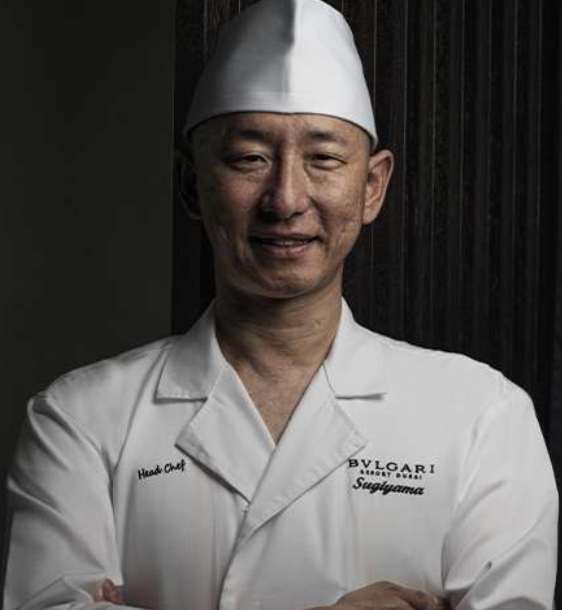
Masahiro Sugiyama, Executive Chef
Every omakase restaurant lives or dies by its chef, and Hōseki is a good example of why. The man behind the counter is Chef Masahiro Sugiyama.
Sugiyama comes from a family with deep roots in the craft. He is a sixth-generation sushi chef from Tokyo. Press material from the opening described more than 157 years of family sushi tradition behind him. That kind of lineage is rare even in Japan, and it shapes his approach. He is not working from a recipe book he picked up along the way. He grew up inside the discipline, absorbing it the way other people absorb a mother tongue.
In practice, this shows up in three ways.
Knife work. Sushi depends on precise cutting. The angle, the thickness and the direction of each slice affect texture and flavor. Dining guides that have reviewed Hōseki single out the team’s knife skills as a highlight, and watching them work from a few feet away is part of the pleasure.
Respect for ingredients. Sugiyama’s approach is to let high-quality fish and rice speak for themselves. Ingredients arrive from Japan, and the cooking is designed to bring out what is already there rather than cover it up.
Personalization. One detail from Michelin Guide’s description stands out: the team takes each guest’s individual tastes into account, so no two meals are exactly alike. A good omakase chef reads the room. They notice whether you eat quickly or slowly, what you respond to, and what you leave. Over a two-hour meal, that attention allows the experience to adapt.
The hotel’s own description notes that the chef’s preparations change daily. That is worth appreciating. In a city where many restaurants offer a fixed menu for months, a counter where the plan shifts with the day’s catch feels refreshingly alive.
Sugiyama leads a small team, and you will notice how closely they work together. The choreography at the counter, with one person handling rice, another slicing and another presenting, is quietly impressive. It is a good reminder that omakase is as much about discipline as creativity.
If you enjoy chef-led dining and want to understand the person shaping your meal, this is the kind of place where conversation with the chef, even in a few quiet words, becomes part of the experience.
Opening Hours
Because Hōseki is so small, its schedule is tight, and it pays to plan around it. Based on the Michelin Guide listing, the weekly pattern looks like this:
| Day | Lunch | Dinner |
|---|---|---|
| Monday | Closed | Closed |
| Tuesday | Closed | Closed |
| Wednesday | Not listed | 6:00 PM–8:00 PM and 8:30 PM–11:00 PM |
| Thursday | 1:00 PM–3:00 PM | 6:00 PM–8:00 PM and 8:30 PM–11:00 PM |
| Friday | 1:00 PM–3:00 PM | 6:00 PM–8:00 PM and 8:30 PM–11:00 PM |
| Saturday | 1:00 PM–3:00 PM | 6:00 PM–8:00 PM and 8:30 PM–11:00 PM |
| Sunday | 1:00 PM–3:00 PM | 6:00 PM–8:00 PM and 8:30 PM–11:00 PM |
A few points are worth keeping in mind.
Two dinner seatings. The listing shows an early and a late evening window. Since the experience runs about two hours, this suggests structured seatings rather than guests drifting in at random. Arriving on time matters. The chef paces the meal for the whole counter, and a late arrival can disrupt the flow.
Lunch is a quieter option. If you want daylight over the skyline and a less formal mood, a weekend or Thursday lunch can be a smart choice.
Reservations are required. The hotel states that reservations are needed, and an earlier report on the restaurant’s opening described a no walk-in policy.
Hours can change. Opening days and times have shifted since the restaurant first opened in 2018, when it served lunch and dinner five days a week. Always confirm the current schedule directly with Bulgari Resort Dubai before you book or travel.
Location & Interior
Hōseki Dubai is on the 4th floor of Bulgari Resort Dubai, on Jumeirah Bay Island in Jumeirah 2. The island is a crescent-shaped, causeway-connected development just off the coast, and it has an exclusive, low-density feel that contrasts sharply with the busy mainland. Crossing onto it already sets the tone: quieter, calmer, a step away from the city’s rush.
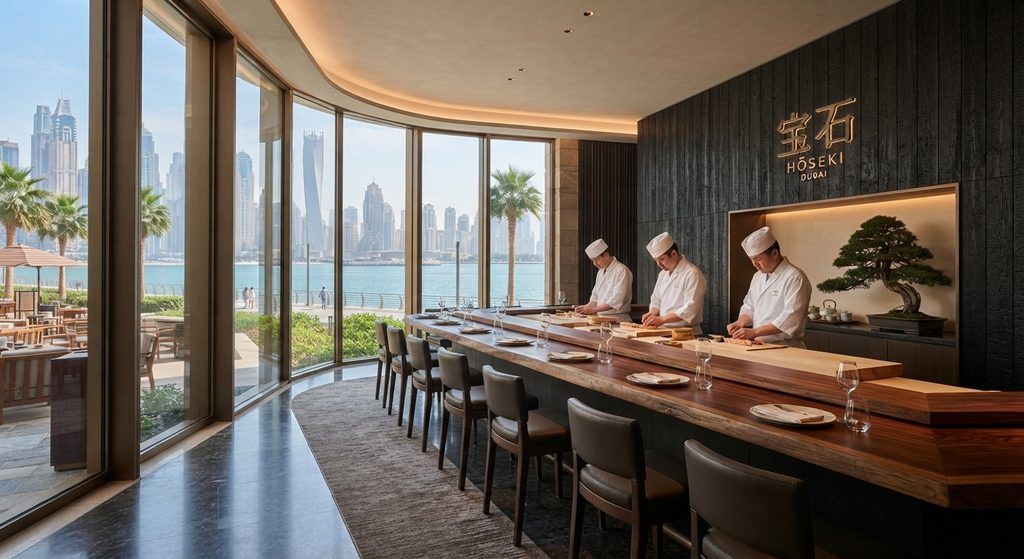
The hotel itself is one of the most talked-about addresses in Dubai, and Hōseki is one of several dining venues inside it. Others include Il Ristorante Niko Romito and the Yacht Club restaurant. Together they make the resort a destination for diners as well as guests.
The arrival. Guests are welcomed in a space inspired by the tokonoma, a traditional Japanese alcove used for displaying meaningful objects. Press descriptions mention bonsai plants and power stones. From there, hostesses in kimonos guide you to the counter. It is a short transition, but it works. By the time you sit down, you have left the hotel behind and entered something more like a Tokyo sushi-ya.
The dining room. The interior is modern and minimal, with polished finishes, touches of dark wood and a warm color palette. Nothing is flashy. The Michelin Guide describes the décor as understated and clean-lined, and the restaurant as elegance personified. The point is to remove distraction so your attention goes to the counter and the plate.
The view. Large windows face the Dubai skyline, and the effect is quietly dramatic. At lunch, daylight gives you a clear, wide view of the city. At dinner, the lights come up and the skyline becomes a glowing backdrop. The setting is part of the reason the restaurant is often described as a place to enjoy a “glittering view” with each intimate dinner.
The seating. The counter is the heart of the room. Hotel materials say it seats nine guests. One Michelin Guide listing mentions 18 counter seats, so the figure may differ across sources or over time. If seat count matters for your plans, ask the restaurant directly. Either way, the size is tiny by any standard, and that smallness is the whole point.
The private room. For groups, there is a private dining room that, according to the hotel, seats up to twelve. It is a good option for celebrations or business dinners where you want privacy without losing the quality of the cooking.
The overall feeling is one of calm. Voices are low, movements are deliberate, and the room encourages you to slow down. That atmosphere may be the most underrated part of the experience.
Gastronomy
The food at Hōseki Dubai follows the Edomae sushi tradition, which began in old Tokyo, then known as Edo. Before refrigeration, chefs used techniques like curing, marinating and aging to keep fish safe and bring out its flavor. Today those methods remain, but they are used for taste rather than necessity. The result is sushi that tastes layered and considered rather than simply raw.
At Hōseki, this tradition is paired with top-quality ingredients flown in from Japan. The hotel says its preparations change daily, and guides describe the cooking as refined, technically skilled and beautifully presented.
What an omakase meal typically involves. Exact dishes vary, and the restaurant does not publish a fixed list, but a counter meal of this style usually unfolds in stages:
- Opening small plates. These are light, seasonal courses that wake up the palate.
- Sashimi and nigiri. Pieces of fish served over carefully seasoned rice, often brushed with a touch of soy or finished with citrus or salt, so no extra dipping is needed.
- Richer courses. As the meal progresses, fattier or stronger-flavored fish may appear.
- A closing sequence. Usually a soup, a roll or a sweet finish.
Because the chef adjusts to each guest, your meal may differ from the person sitting next to you.
The rice. Rice is half the story in sushi. At serious counters, it is seasoned, kept at the right temperature and shaped with a very light hand so it falls apart gently in the mouth. If you pay attention, you can taste how much thought goes into it.
The pacing. A two-hour meal can feel long on paper, but the rhythm is what makes it work. Each piece is made, placed in front of you and meant to be eaten right away, when the texture and temperature are at their best. This is why guests are encouraged to eat with their hands and to enjoy each piece immediately.
Dietary needs. Because the menu is chef-led and ingredient-driven, it is wise to mention allergies, dietary restrictions or strong dislikes when you reserve. The team can plan around them far better with advance notice than at the counter.
What makes the gastronomy at Hōseki Dubai memorable is not novelty. It is clarity. Each piece tastes like exactly what it is, prepared with skill and served at its peak. In a city known for spectacle, that restraint is its own kind of luxury.
Service & Wine
Service at a counter this small is a different thing from service at a large restaurant. There is nowhere to hide, and Hōseki leans into that.
Kimono-clad hosts. Staff dress in traditional kimonos, as noted by the Michelin Guide. It is a small detail, but it adds to the sense that you have stepped into a Japanese setting. The hostesses guide you from the entrance to your seat, and the whole arrival feels ceremonial without being stiff.
Warm but unobtrusive attention. Guides describe the service as warm, and that matches what you would expect from an intimate counter. The team is close enough to notice when your glass is low or when you want a pause. They are also practiced at not interrupting the rhythm of the meal.
Chef interaction. One of the quiet joys of omakase is being able to ask questions. If you are curious about a fish, its origin or how it was prepared, the counter is where to ask. Chefs generally appreciate engaged guests, though it is best to follow the mood of the room. Some evenings are chatty and others are more contemplative.
Drinks. Japanese dining and drinks go hand in hand. Sake is the classic partner for sushi, with different styles that suit different fish, from crisp and dry to softer and rounder. Many guests also choose a glass of wine, tea or a non-alcoholic option. Beverage availability and pairing menus can change, so ask the restaurant what is currently offered when you book.
A tip for ordering drinks. If you are new to sake, tell the team what you usually enjoy, whether that is white wine, light beer or something richer. They can steer you toward a style that suits your taste instead of leaving you to guess.
Dining solo. The Michelin Guide flags Hōseki as a good place for solo diners. Counter seating makes eating alone comfortable, since your attention is on the chef and the food rather than an empty chair.
Good service at this level is mostly invisible. You should leave feeling cared for, not managed. At Hōseki Dubai, the combination of ceremony, warmth and precision is a big part of why the meal feels special.
Why to Choose Hōseki?
Dubai has plenty of Japanese restaurants, including a growing number of omakase counters, so what makes Hōseki worth the booking and the budget?
1. A true counter experience. With only a handful of seats, you get a level of closeness and attention that larger restaurants cannot offer. You see the knife work, hear the chef explain a piece and receive each course as soon as it is ready.
2. A chef with deep family roots. Chef Masahiro Sugiyama is a sixth-generation sushi chef from Tokyo, with a family tradition stretching back more than 150 years. That heritage gives the cooking a sense of authenticity that is hard to fake.
3. Ingredients flown in from Japan. The hotel emphasizes that its ingredients come directly from Japan. For sushi, where the quality of the fish and rice is everything, this matters enormously.
4. A personalized meal. Guides note that the team adapts to each guest’s tastes. That makes the experience feel tailored rather than standardized.
5. A setting that supports the food. The skyline views, the minimalist interiors and the tokonoma-style welcome all work toward one goal: helping you focus and slow down.
6. Strong recognition. The restaurant’s place in the Michelin Guide Dubai and its ranking among the region’s best restaurants give you confidence about its quality, even if awards should never be the only reason to choose a restaurant.
7. A calm escape. Jumeirah Bay Island has a quiet, almost secluded feel. Combined with a small counter and a two-hour meal, the evening can feel like a pause from the pace of the city.
Who it suits best. Hōseki is ideal for special occasions, couples, serious food lovers, solo diners who enjoy counter seating, and anyone curious about traditional Edomae sushi.
Who might think twice. If you prefer a large, lively dining room, a flexible à la carte menu, or a lower price point, other Japanese restaurants in Dubai may suit you better. Omakase at this level is a commitment of both time and money.
Menu with Prices
Hōseki does not have a conventional menu, since the chef selects each course. It does, however, offer set omakase experiences at fixed prices per person. Published prices vary by source and date, so the figures below should be treated as a guide only.
| Omakase Option | Reported Price (per person) | What to Expect |
|---|---|---|
| HISUI | AED 1,750 | Chef-selected omakase with seasonal, Japan-sourced ingredients |
| RURI | AED 2,250 | A more extensive chef-selected omakase experience |
| Entry-level reference | From around AED 1,300 | Starting price cited by some dining guides, which may reflect an earlier or different menu |
Important notes on pricing:
- The HISUI and RURI figures come from restaurant roundups published in 2024 and 2026. The “from AED 1,300” figure comes from a separate guide, so prices have likely changed over time.
- It is not clear from these sources what is included in each price, such as service charge, taxes or beverages. Ask when you book.
- Drinks, including sake, wine and tea, are usually charged separately at restaurants of this kind.
- Specific dishes are not listed because the chef changes them daily.
Before you book, confirm the current menus, prices, and what is included directly with Bulgari Resort Dubai. A short email or call can save you any surprises.
FAQs
1. Where is Hōseki Dubai located?
Hōseki is on the 4th floor of Bulgari Resort Dubai, on Jumeirah Bay Island in Jumeirah 2, Dubai.
2. What does Hōseki mean?
It means “gemstone” in Japanese. The name reflects the restaurant’s small, jewel-box character.
3. What type of food does Hōseki Dubai serve?
It serves omakase, a chef-led Japanese tasting experience focused on Edomae-style sushi, using ingredients imported from Japan.
4. Do I need a reservation?
Yes. The hotel says reservations are required, and the restaurant has been reported to have a no walk-in policy. Book well ahead, especially for weekends.
5. How long does the meal take?
Around two hours, based on the restaurant’s opening information. The chef paces the courses throughout, so arrive on time.
6. How much does it cost?
Reported prices range from about AED 1,750 per person for the HISUI menu to AED 2,250 per person for the RURI menu, with some guides citing a starting price near AED 1,300. Confirm current pricing with the restaurant.
7. Can I dine alone or in a group?
Both work. Counter seating suits solo diners, and the hotel says a private dining room seats up to twelve for groups.
Conclusion
Hōseki Dubai is a restaurant built on restraint. It does not rely on size, noise or spectacle. Instead, it offers a small counter, a chef from a long line of sushi masters, ingredients selected from Japan and a view that turns the Dubai skyline into a backdrop for the meal.
From the ceremonial welcome in the tokonoma-inspired entrance to the kimono-clad hosts and the quiet rhythm of the counter, everything is designed to slow you down. The food follows suit: clean, precise and personal, shaped by Chef Masahiro Sugiyama and his team to suit the guests in front of them.
It is not an everyday dinner. The price is high, the seating is limited, and the booking takes planning. But for those who value craft, intimacy and tradition, it delivers something that is hard to find in a city of big gestures: a meal that feels truly personal.
If you are considering a visit, confirm the current opening days, menu prices and what is included, reserve early, and arrive ready to hand over the decisions. That is what omakase is all about, and Hōseki does it with real care.

I’m passionate about food and the rich culture of the UAE. I’ve spent years exploring authentic Emirati dishes and diverse cuisines from across the region. Through Habibi Menus, I want to make it easy for everyone to discover real restaurant menus, learn about traditional flavors, and enjoy the best food the UAE has to offer. I focus on sharing clear, simple, and helpful information so everyone can understand and enjoy the local food culture. When I’m not working on the site, I love visiting new restaurants and trying different dishes with my family and friends.